
A steadfast ideological voice
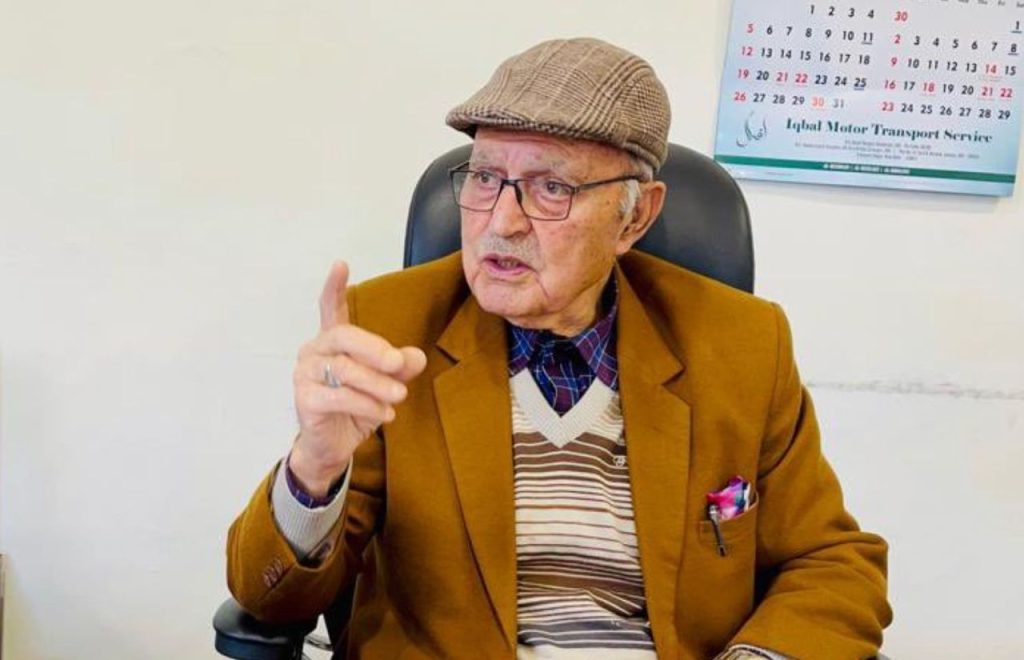
The passing of Dr. Sheikh Mustafa Kamal on 14 July 2026 marks the end of an important chapter in the political history of Jammu and Kashmir. As the younger son of Sher-e-Kashmir Sheikh Mohammad Abdullah, he inherited a distinguished political legacy, yet his own identity was shaped not merely by lineage but by decades of dedicated public service, organisational leadership, and unwavering commitment to the ideals of the Jammu and Kashmir National Conference (NC). Serving as the party’s Additional General Secretary until his last days, he remained one of its most steadfast ideological voices. Over several decades, Dr. Kamal occupied a unique position within the National Conference. He served as a minister in successive NC-led governments and played a significant role in strengthening the party organisation during periods of political stability as well as constitutional uncertainty. While many leaders adapted their political language to changing circumstances, Dr. Kamal remained remarkably consistent in defending the foundational principles that had shaped the National Conference since its inception. He regarded the Naya Kashmir Manifesto not merely as a historical document but as a continuing vision of democratic governance, social justice, secularism, and inclusive development. He firmly believed that the dignity and welfare of the people of Jammu and Kashmir could best be secured through representative institutions, constitutional safeguards, and responsive governance. Throughout his public life, he remained deeply committed to these principles, viewing them as essential to preserving both the identity of the region and the democratic aspirations of its people. Among the issues closest to his heart was the restoration of Jammu and Kashmir’s constitutional position. Following the constitutional changes of August 2019, Dr. Kamal consistently advocated the restoration of full statehood and repeatedly argued that the constitutional relationship between Jammu and Kashmir and the Union of India should reflect the spirit of the pre-1953 arrangement. His views were expressed candidly and without ambiguity, earning him a reputation as one of the National Conference’s most forthright and ideologically uncompromising leaders. Equally central to his political philosophy was his unwavering belief in the autonomy envisioned by Sher-e-Kashmir Sheikh Mohammad Abdullah. He remained a steadfast defender of the Greater Autonomy Resolution adopted by the Jammu and Kashmir Legislative Assembly in 2000, maintaining that constitutional guarantees, democratic participation, and respect for regional identity were indispensable to lasting political stability. Whether one agreed with his position or not, few questioned the consistency and conviction with which he articulated it. Dr. Kamal also believed that peace in South Asia required sustained dialogue rather than prolonged confrontation. He consistently advocated engagement between India and Pakistan, while emphasising that the aspirations and concerns of the people of Jammu and Kashmir could not be ignored in any meaningful peace process. He supported cross-Line of Control trade, greater people-to-people interaction, and adherence to ceasefire agreements as practical measures capable of reducing hardship for border communities and fostering mutual confidence. Within the National Conference, he was widely respected as an outspoken yet disciplined organisational leader. His interventions often reflected a more traditional interpretation of the party’s ideology than those of many contemporaries, making him one of the principal custodians of its historical and ideological legacy. His political life demonstrated that conviction and organisational commitment remain indispensable qualities in democratic politics. For my family, his passing is also deeply personal. My late father, Haji Abdul Gani Shah Veeri, shared a long and close association with Dr. Kamal during some of the most challenging phases in the political history of Jammu and Kashmir. Their relationship was founded on mutual trust, shared ideals, and an abiding commitment to the National Conference. Whenever I had the privilege of meeting Dr. Kamal, he received me with warmth and affection, reflecting the respect he had always extended to my late father. Despite his seniority, he remained approachable, gracious, and deeply connected to party workers and colleagues alike. His demise marks the departure of one of the last senior leaders who had personally witnessed and participated in many defining moments of Jammu and Kashmir’s political evolution. As the National Conference continues to pursue democratic governance, inclusive development, and the restoration of constitutional rights, the contribution of leaders such as Dr. Sheikh Mustafa Kamal will remain an enduring source of guidance and inspiration. He will be remembered not only as a loyal National Conference stalwart and experienced administrator but also as a principled defender of democratic politics, constitutionalism, and the enduring ideals of the Naya Kashmir Manifesto. His legacy will continue to occupy a distinguished place in the political history of Jammu and Kashmir. While accompanying the mortal remains of Dr. Mustafa Kamal to his final resting place, alongside thousands of mourners, including senior leaders from various political parties, the reality of human mortality unfolds in the graveyard. Standing at the edge of the grave, his elder brother, Dr. Farooq Abdullah, watched in silent grief as his lifelong companion was lowered beneath the earth. To witness a towering political figure, once at the centre of public life, disappear beneath a few feet of soil was deeply moving. In that solemn moment, the ultimate destiny of every human being became starkly evident. Tears welled up as one reflects on the transient nature of worldly life and the inescapable end that awaits us all. May Almighty Allah forgive his shortcomings, grant him the highest place in Jannat-ul-Firdous, and give strength and patience to his bereaved family. Ameen. The writer is a serving legislator representing the Srigufwara–Bijbehara Assembly Constituency.
Source: Read Full Article
Leave a Reply