
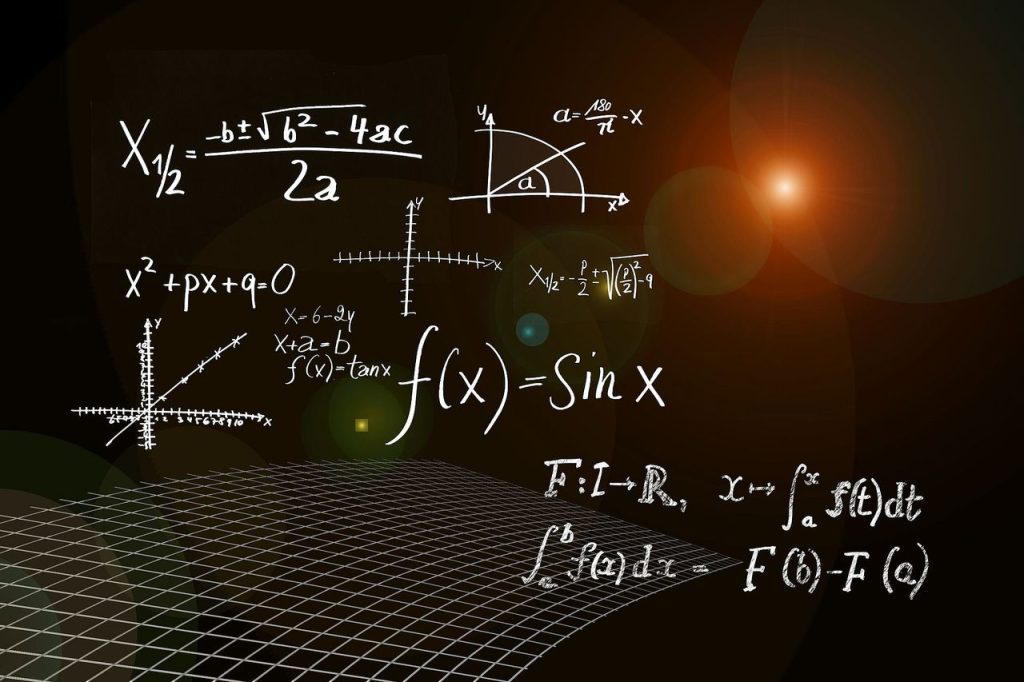
Mathematics is much more than a school subject. It is the language of logic, reason, patterns, and discovery. Every scientific invention, technological breakthrough, engineering design, medical advancement, and economic model begins with mathematics. Whether we speak of Artificial Intelligence, Machine Learning, genetics, medicine, finance, business administration, or environmental science, mathematics forms the foundation. A nation that wishes to become scientifically advanced must first build a mathematically confident society. Yet, for many students, mathematics is a subject to fear rather than enjoy. This fear does not arise because mathematics is difficult by nature; it often develops because its foundations are not built carefully. Concepts are introduced suddenly, students are expected to memorise instead of understand, and many fail to see how mathematics connects with everyday life. The result is mathematics phobia, which discourages many bright young minds from pursuing science and technology. The solution lies not in making mathematics easier, but in making its learning more natural and progressive. Like a tree that grows from a tiny seed, mathematical understanding should develop gradually. Instead of introducing important topics only in higher classes, they should be spread across several years. Concepts such as sets, relations, and functions should begin in Class VII through simple examples familiar to children. Their depth and applications should increase gradually in Classes VIII, IX, X, XI, and XII. Students will then develop confidence instead of feeling overwhelmed when they reach higher classes. The same approach should be followed for calculus. It is one of the greatest achievements of mathematics, yet many students encounter it for the first time in Classes XI and XII. Ideas such as change, motion, growth, slopes, and accumulation can be introduced in simple ways from Class VII onwards. Every year should add another layer of understanding until students are ready for formal differentiation and integration. Learning should resemble climbing a staircase, not jumping to the top. Other important topics, including statistics, probability, arithmetic, sequences and series, trigonometry, logical reasoning, and mathematical modelling, should also follow this progressive pattern. Every new chapter should strengthen the previous one, making mathematics a connected journey rather than a collection of unrelated topics. This calls for a careful review of school textbooks and syllabi. The sequence of chapters needs to be reorganised so that ideas grow naturally from simple to advanced concepts. Mathematics should not be taught merely for examinations but for understanding, curiosity, and problem-solving. No curriculum, however well designed, can succeed without competent and motivated teachers. Teachers are the true architects of mathematical learning. Before expecting students to excel, we must first empower teachers through regular training programmes, workshops, refresher courses, and exposure to modern teaching methods. Mathematics should be taught through activities, visual demonstrations, technology, practical examples, puzzles, and discussions rather than through memorisation alone. A teacher who enjoys mathematics inspires students to enjoy it as well. A strong institutional framework is equally important. Nearly fifteen years ago, the Government established Institutes of Mathematics at Amar Singh College, Srinagar, and MAM College, Jammu, with the vision of promoting mathematical education and research. These institutions had the potential to become centres of excellence for the entire region. Unfortunately, despite the passage of time, they have not yet achieved the prominence they deserve. With a clear policy, academic leadership, adequate resources, research support, and collaboration with universities and national institutions, these centres can still play a transformative role. The Ministry of Education and the Higher Education Department have an excellent opportunity to develop them into hubs for teacher training, curriculum development, textbook preparation, research, mathematics Olympiads, outreach programmes, and innovation. A strong institution multiplies the strength of every teacher and every student. Another important step is to ensure that every student acquires basic mathematical literacy, even if they do not choose mathematics as a specialised subject. A concise mathematics booklet containing selected chapters on arithmetic, percentages, statistics, probability, logical reasoning, graphs, trigonometry, sequences and series, and introductory calculus should be made compulsory for all senior school students. Mathematics today is essential not only for scientists and engineers but also for doctors, economists, teachers, managers, geneticists, biochemists, environmental scientists, and social researchers. The emergence of Artificial Intelligence, Machine Learning, Data Science, Robotics, and Quantum Computing has made mathematics more relevant than ever before. These technologies are built upon algebra, calculus, probability, statistics, optimisation, and logic. Students who develop mathematical thinking from an early age will be better prepared for the careers of tomorrow. Mathematics should also move beyond classroom walls. Universities, colleges, schools, scientific organisations, and professional bodies should organise mathematics festivals, exhibitions, competitions, public lectures, and outreach programmes, particularly in rural areas. Young minds should experience mathematics as an exciting tool for discovery rather than merely another examination subject. Equally important is reducing mathematics phobia. Children should never be told that mathematics is only for exceptionally gifted students. Every child can learn mathematics if concepts are introduced gradually and explained patiently. Learning should encourage curiosity rather than fear, understanding rather than memorisation, and confidence rather than anxiety. Perhaps the greatest contribution of mathematics is that it develops a scientific temper. It trains the mind to think logically, analyse evidence, identify patterns, solve problems systematically, and make decisions based on facts rather than assumptions. These habits of mind are essential not only in science but also in everyday life. A mathematically trained mind learns to question, investigate, verify, and arrive at conclusions through reason. Mathematics also teaches values that extend beyond the classroom. It reminds us that every great result begins with a simple idea and every difficult problem can be solved step by step. Consider a beautiful mathematical example. A single point has no length or width. Yet countless points together form a line. Countless lines create a plane, and planes together build the three-dimensional world around us. Small elements, when connected with purpose and order, create something remarkable. The same principle applies to education. A curious student, an inspiring teacher, a well-designed textbook, a supportive institution, and a visionary policy may each appear small on their own. Together, they create a generation capable of logical thinking, scientific innovation, and service to society. Mathematics teaches us that harmony arises from order, progress comes through gradual development, and lasting achievements are built upon strong foundations. If we invest in mathematics today, we will not simply produce better mathematicians,we will nurture thoughtful citizens, creative innovators, and compassionate leaders who use knowledge wisely for the advancement of humanity. That is the true equation for a brighter future. I recently had the opportunity to participate in a workshop organised by the Private Schools’ Association of Jammu & Kashmir for mathematics teachers, titled “Let’s Come Together to Understand the Challenges and Explore Meaningful Solutions for Better Mathematics Education.” It was an enriching and thought-provoking interaction where dedicated mathematics teachers shared their classroom experiences, highlighted the challenges they face in teaching the subject, and offered practical suggestions for improving mathematics education. Listening to teachers at the grassroots level is essential because they understand the realities of the classroom better than anyone else. Such workshops should not remain limited to one event; they should be organised regularly in every district and tehsil, bringing together both government and private school teachers. The valuable feedback emerging from these discussions should help shape curriculum reforms, teacher training programmes, textbook development, and educational policy. Dr Nasir Shah, Former Additional Director JKSTIC, DST, has remained actively associated with the promotion of science, scientific temper, innovation, and educational awareness across J&K.
Source: Read Full Article