
Baby steps towards Kabul
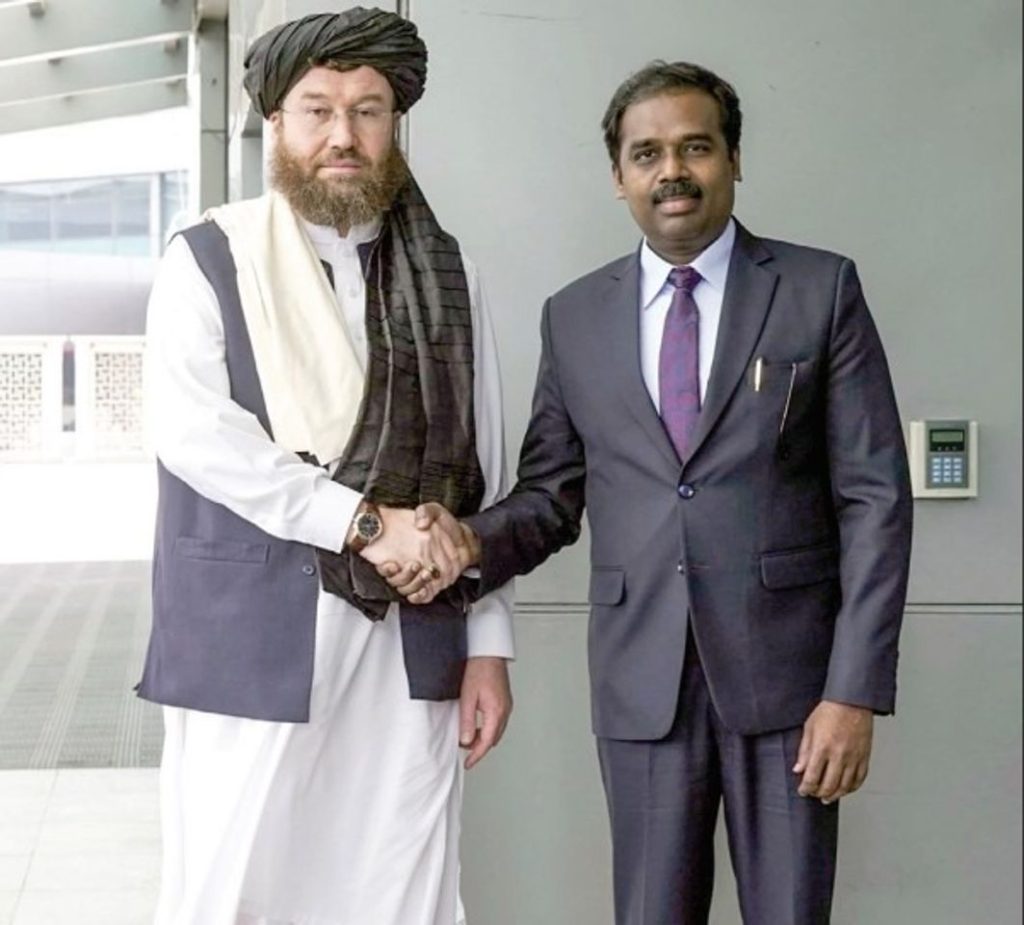
The week-long visit of Afghanistan’s Acting Minister for Agriculture, Irrigation and Livestock, Mawlawi Ataullah Omari, to New Delhi last week may not have attracted much attention, but it marks another important step in the gradual strengthening of India-Afghanistan ties under Taliban rule. During his visit, Omari held talks with Union Agriculture Minister Shivraj Singh Chouhan on expanding cooperation in agriculture, irrigation, agricultural research, livestock, seed technology and trade. The discussions were part of India’s steady and practical engagement with Afghanistan over the past two years. After the Taliban took control of Kabul in August 2021, India had shut its embassy and evacuated its diplomats. However, over the past few years, India has gradually stepped up its engagement with Afghanistan. High-level contacts have resumed, Taliban delegations are regularly visiting New Delhi, and External Affairs Minister S. Jaishankar has held telephone conversations with Afghanistan’s Acting Foreign Minister Amir Khan Muttaqi. India reopened its mission in Kabul by setting up a technical mission in 2022, which was upgraded to a full-fledged embassy in 2025 after visit of the Afghanistan’s acting foreign minister to New Delhi in October 2025. Since then, direct flights have increased, trade has picked up, and people-to-people contacts have resumed. New Delhi works with a caveat. It works with a caution that engagement does not mean recognition. While India is expanding cooperation with the Taliban administration on matters of mutual interest and people-to-people interest, it has not formally recognised the Taliban government. This reflects India’s pragmatic yet cautious approach towards Afghanistan. For India, Afghanistan has never been just another neighbouring country. The two share civilisational links stretching back centuries, from the Gandhara civilisation to the Silk Route. India emerged as one of Afghanistan’s largest development partners after 2001, investing over three billion dollars in roads, dams, power projects, hospitals, schools and the iconic Parliament building in Kabul. Thousands of Afghan students studied in Indian universities, while Afghan traders became familiar figures in Indian markets. Those foundations have not disappeared simply because the Taliban returned to power. The latest agricultural discussions demonstrate how New Delhi is choosing sectors that directly benefit ordinary Afghans while avoiding any appearance of political endorsement of the Taliban government. India has offered cooperation in improving wheat productivity through better seed systems, climate-resilient crop varieties, irrigation technologies, watershed management and agricultural research. The proposed Joint Working Group on agriculture reflects a desire to institutionalise cooperation in areas that directly address Afghanistan’s chronic food insecurity. Nearly 80 percent of Afghans depend directly or indirectly on farming, yet years of war, drought, economic collapse and climate change have devastated agricultural output. India’s expertise in irrigation, high-yield seeds and agricultural research can make a tangible difference without becoming politically contentious. The same approach is visible in India’s humanitarian assistance. Since 2021, New Delhi has supplied wheat, medicines, vaccines, earthquake relief and other humanitarian aid directly to the Afghan people. The emphasis has consistently been on helping ordinary Afghans rather than legitimising the Taliban administration. Trade is also slowly recovering. Afghanistan continues to export dry fruits, raisins, saffron, asafoetida and medicinal herbs to India, while Indian medicines, tea, textiles and engineering goods remain popular in Afghan markets. Business contacts have resumed, and both sides are exploring ways to boost trade and agricultural cooperation. Even though road connectivity between India and Afghanistan continues to face hurdles because of Pakistan, air links between New Delhi and Kabul have massively improved. Cargo and passenger flights have gradually resumed. The reopening of India’s mission in Kabul and the resumption of consular services have further facilitated travel and commercial engagement. For thousands of Afghans with educational, medical and family links to India, these developments have been particularly significant. India continues its engagement not only out of humanitarian concern but also, perhaps, out of strategic calculations. Afghanistan occupies a pivotal location connecting South Asia with Central Asia. Stability in Afghanistan directly affects regional security, counter-terrorism efforts and connectivity projects such as the Chabahar corridor linking India to Central Asia while bypassing Pakistan. India also recognises that disengagement would simply create greater space for rivals. China has rapidly expanded its engagement with the Taliban government through infrastructure projects, mining agreements and diplomatic contacts. Russia, Iran, the Central Asian republics and several Gulf countries have also maintained regular interactions with Kabul. Even Western governments that criticise the Taliban continue to maintain working-level contacts to address humanitarian issues, migration and counter-terrorism. Complete isolation of Afghanistan has therefore become neither practical nor productive. Yet despite increasing engagement, India has deliberately stopped short of formally recognising the Taliban government. No major country has officially recognised the Islamic Emirate of Afghanistan, although several have upgraded diplomatic contacts and accepted Taliban-appointed diplomats. Recognition carries legal and political consequences. It signals acceptance of a government’s legitimacy under international law. For India, several serious concerns remain unresolved. Foremost among them is the Taliban’s continued denial of basic rights to Afghan women and girls. Girls remain barred from secondary schools and universities. Women face sweeping restrictions on employment, freedom of movement and public participation. These policies have drawn sustained criticism from the United Nations, human rights organisations and much of the international community. The United Nations has repeatedly warned that Afghanistan has become the only country in the world where girls are systematically denied education beyond primary school. UN officials have described restrictions on women as one of the most severe institutional assaults on gender equality anywhere in the world. The UN Assistance Mission in Afghanistan (UNAMA) and other branches of the United Nations working with children and women have consistently reported ongoing concerns over restrictions on civil liberties, media freedom, political participation and judicial independence. Humanitarian agencies estimate that more than half of Afghanistan’s population requires humanitarian assistance, while widespread poverty natural disasters and unemployment continue to worsen. For India, a democracy that consistently advocates inclusive governance, these issues cannot simply be overlooked. New Delhi has repeatedly emphasised the need for an inclusive political system representing all sections of Afghan society, respect for women’s rights and assurances that Afghan territory will never again be used for terrorism against other countries. These remain the benchmarks against which India’s policy continues to evolve. Another major change in the region has been the worsening ties between Pakistan and the Taliban government. Pakistan had expected the Taliban’s return to power to strengthen its influence in Afghanistan, but relations have instead deteriorated. Islamabad accuses Kabul of allowing the Tehreek-e-Taliban Pakistan (TTP) to operate from Afghan soil, a charge the Taliban denies. The tensions have led to cross-border clashes, including Pakistani air strikes inside Afghanistan and frequent firing along the Durand Line. Adding to tensions has been Pakistan’s decision to expel hundreds of thousands of undocumented Afghan refugees and migrants. Families who lived in Pakistan for decades have been forced to return to an Afghanistan already struggling with economic collapse, food shortages and limited employment opportunities. The mass deportations have created one of the region’s largest humanitarian challenges. International organisations have warned that Afghanistan lacks the capacity to absorb such large numbers of returnees. Many families arrive with few possessions, uncertain livelihoods and no access to adequate housing. Ironically, the Taliban government now finds itself confronting pressure from the very country that once served as its principal sanctuary. The political analyst says that this changing regional scenario gives both opportunities and challenges for India. While the growing tensions between Pakistan and the Taliban have reduced Islamabad’s influence in Afghanistan. Surinder Singh Oberoi, National Editor Greater Kashmir
Source: Read Full Article



Leave a Reply